Italy: United to Defend the Ceramic District
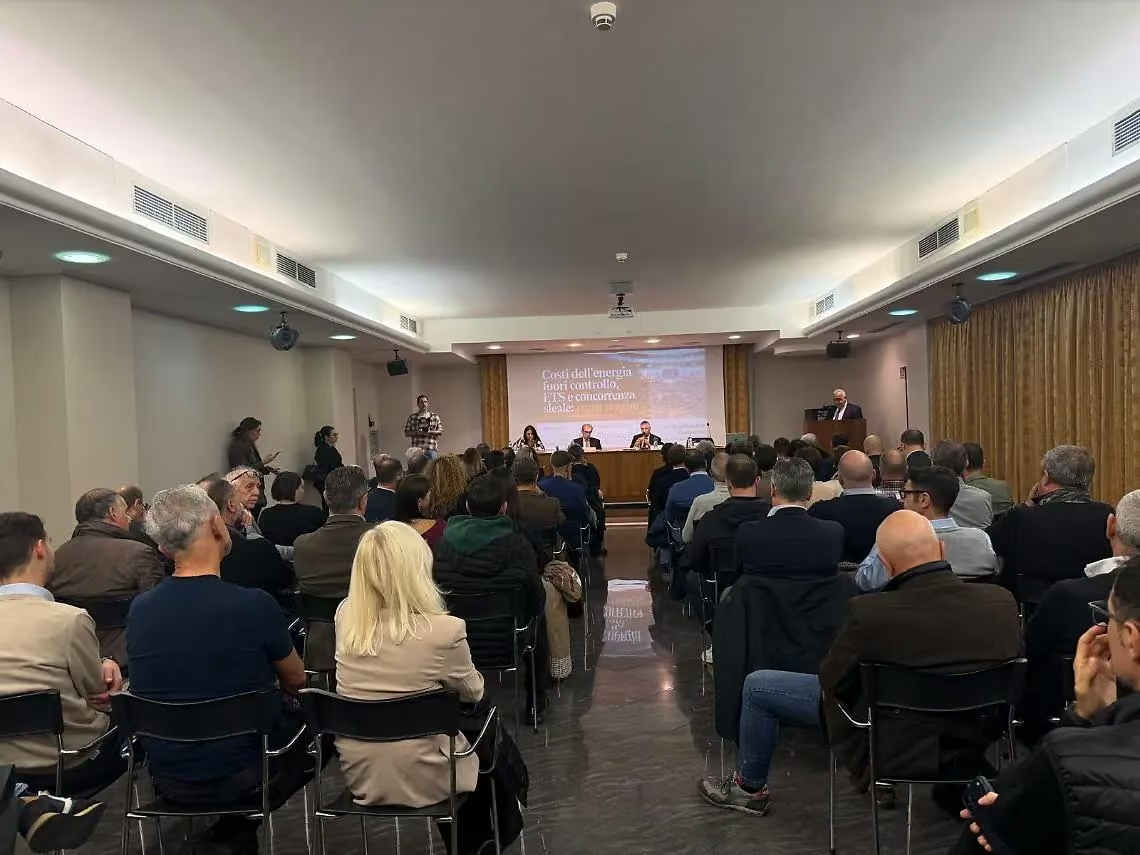
Dialogue among companies, Unindustria, Confindustria Ceramica, and institutions on the future of the supply chain
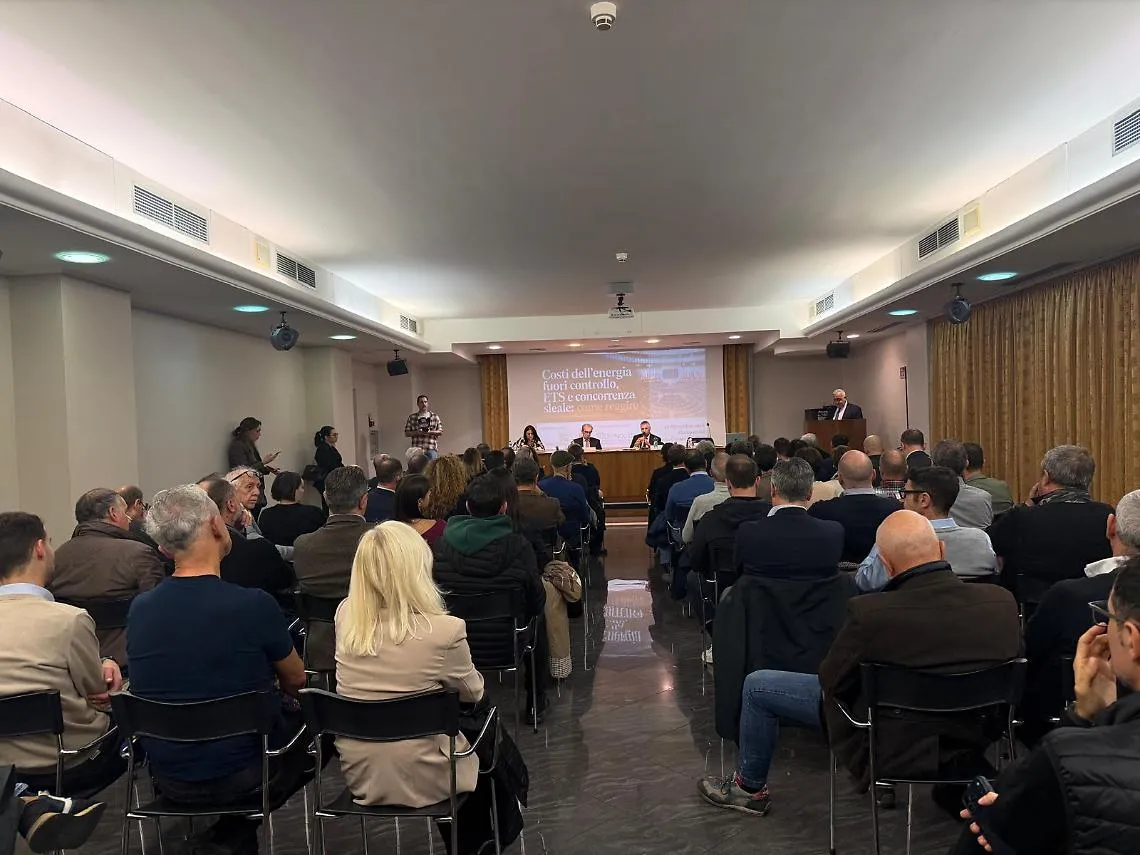
CIVITA CASTELLANA - The ceramics sector remains a vital and competitive supply chain, yet securing its future demands urgent action against high energy costs, a review of the ETS system, and stronger protection against unfair international competition. These were the key takeaways from a conference held in Civita Castellana. Mayor Danilo Corazza opened the proceedings, recalling “the millennia-old ceramic tradition of the territory.” He emphasized that “the district has finally begun to speak with a single voice: cohesion among businesses, trade associations, and local institutions is a strategic necessity. Defending the district,” he concluded, “also means placing at the center the dignity of those who, every day, through hard work, expertise, and dedication, make this excellence possible.” Andrea Belli, president of Unindustria Viterbo, stated that “the Ceramic District is a globally recognized excellence that must be promoted and protected: over 80% of Italy’s sanitary ware is produced here. Exports account for 44.8% of revenue, up 2.3 points, representing approximately 150 million euros. Issues such as energy costs and unfair competition are not merely technical”
cismi: decide competitiveness, investment and employment across an entire territory, and deserves our full attention.” “The ceramic industry is present and investing, but it faces uncertainty driven by geopolitical tensions and weak demand,” said Augusto Ciarrocchi, President of Confindustria Ceramica. “Energy for our companies comes primarily from gas, the only technology currently available and for the foreseeable future. The cost and volatility of methane in Europe make it necessary to implement tools that can stabilize the price of at least a portion of the consumption of gas-intensive businesses, in order to safeguard their competitiveness. For this purpose, national gas and already incentivized biomethane can be used, allocated to these companies through dedicated procedures at sustainable prices. It is also necessary to safeguard fair international competition,” Ciarrocchi added, “both through new and effective regulations and with an anti-dumping action against imported tableware that the Association is organizing.” “In the Civita Castellana district, 28 of Italy’s 31 industrial sanitary ceramic companies are concentrated: an employment pillar for the Tu
The ceramic district represents a strategic manufacturing excellence for the nation that must be protected from uncontrolled energy costs, ETS system distortions, and unfair competition, stated Mauro Rotelli, President of the Environment, Territory and Public Works Committee of the Chamber of Deputies. To concretely support the competitiveness and innovation of these companies, Rotelli has worked during his tenure as committee president to value sustainability and water-saving investments in public procurement. An amendment to the Infrastructure Decree, first proposed by Rotelli, clarified the application of Minimum Environmental Criteria in tenders for public building renovations, rewarding quality production and environmental respect. The ETS must serve as a decarbonization tool, not a factor of deindustrialization, declared Maurizio Tarquini, General Director of Confindustria. The organization’s CSC highlights that since 2005, approximately half of the emission reductions in the Italian manufacturing sector included in the ETS are attributable to plant closures. The goal must be
The strategy centers on maintaining production within Europe, leveraging cleaner technologies and fostering enterprises capable of global competition. A profound overhaul of the regulatory framework is required, a stance advocated by Confindustria in alignment with the German BDI and the French MEDEF. Trilogue negotiations on heat and fuel benchmarks have concluded with a full adoption of the Confindustria position. This outcome grants companies 121 million additional emission allowances compared to current legislation, including five million specifically reserved for sectors facing severe competitive disadvantages. The remaining 116 million allowances are allocated to various sectors on a pro-rata basis. However, market mechanics also require intervention. In 2025 alone, total revenues from the Emissions Trading System (ETS) exceeded 43 billion euros, with approximately 24 billion flowing directly to member states. Consequently, there is a call for the European Parliament, the Council, and the Commission to collaborate on a comprehensive framework. This should include a realistic trajectory for the period up to 2030, credible mechanisms to prevent price distortions, benchmarks aligned with the technological potential of individual sectors, effective free allowances to counter carbon leakage, and the use of revenues to genuinely support industrial transformation. Stefano Cavedagna, a Member of the European Parliament, stated, “We have always been in favor of”
The Italian government under Prime Minister Giorgia Meloni successfully defended the competitiveness of the ceramic sector during last week’s trilogue in Europe. However, revising the “benchmark” is merely an initial step that provides temporary relief to manufacturers. The Emissions Trading System (ETS) must be suspended as soon as possible and subsequently reformed. While the left pursues ideological choices aligned with the Green Deal, we stand with those who produce goods and create jobs in Italy. Armando Cafiero, Director General of Confindustria Ceramica, emphasized that recent decisions by Brussels regarding the ETS benchmark for ceramics represent a concrete intervention for the sector and a reversal of trend achieved through a genuine national system operation. In a context of unsustainable energy costs, efforts must now continue to protect Italian manufacturing and the high-quality work it ensures in our territories. This includes the comprehensive revision of the ETS system and countering increasingly aggressive unfair competition from countries such as China and India. Antonella Sberna, Vice President of the European Parliament, concluded the proceedings. She stated that the revision of ETS parameters in Europe represents a first concrete result for Italian ceramics, which is also the fruit of a dialogue
The collaboration with businesses and local authorities has been essential. Since the start of the term, we have worked side by side to secure a higher allocation of free allowances and to ensure the recognition of the sector's specific production characteristics. This represents a significant step forward in restoring competitiveness to Italy's leading companies. However, we will continue to demand a thorough revision of the ETS and to forcefully address the issue of unfair competition from international players.
Frequently asked questions
What urgent actions did industry leaders in Civita Castellana identify for the ceramic supply chain?
Leaders called for urgent action against high energy costs and a review of the ETS system. They also emphasized the need for stronger protection against unfair international competition to secure the sector's future.
What percentage of Italy's sanitary ware is produced in the Ceramic District according to Unindustria Viterbo?
Over 80% of Italy's sanitary ware is produced in the Ceramic District. This region is recognized as a global excellence in ceramic manufacturing and requires promotion and protection.
How does the current export performance of the Ceramic District compare to previous periods?
Exports account for 44.8% of revenue in the district, representing a 2.3 point increase. This growth highlights the region's competitive position in the global market despite current challenges.